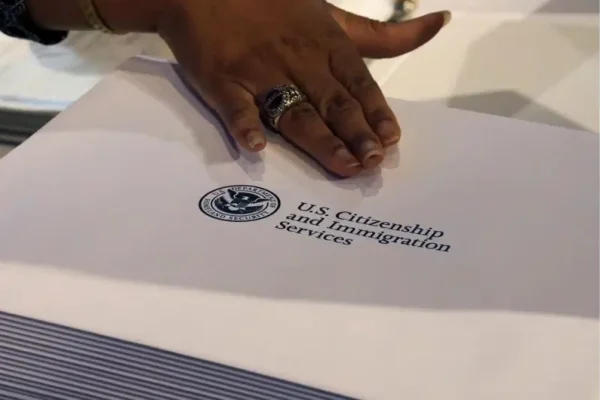
Could past immigration records resurface for individuals who became U.S. citizens years ago? As the Trump administration intensifies efforts to revoke the citizenship of naturalized individuals—and with technological advancements making it easier to cross-reference names, identities, fingerprints, and immigration records—issues that went undetected years ago are now more likely to come to light.
Ricky Murray, a former senior official at U.S. Citizenship and Immigration Services (USCIS), told Newsweek that the agency has recently centralized its efforts regarding the revocation of naturalized citizenship and invested in technology to link names, identities, fingerprints, and immigration records. This means that the records an immigrant has accumulated over the years can now be more easily cross-referenced to identify potential connections between them.
Murray noted that technology is not the sole reason for the recent rise in citizenship revocation cases. A combination of factors—including increased government staffing, policy adjustments, and heightened scrutiny of previously approved immigration cases—has enhanced the government’s ability to identify and pursue potential cases.
However, having held citizenship for many years does not mean the government can summarily revoke a person’s U.S. citizenship simply because an old record has resurfaced. Under federal law, denaturalization proceedings typically arise when an individual was ineligible for naturalization at the time it was granted, or obtained citizenship through the concealment of material facts or willful misrepresentation.
Cases recently made public by the Department of Justice (DOJ) offer insight into the issues the government is investigating. Recent lawsuits filed by the DOJ include allegations that individuals were involved in serious crimes prior to naturalization but failed to disclose them, as well as cases involving the use of false identities to obtain citizenship. Cases announced by the DOJ in August involved serious offenses such as attempted murder, domestic violence, and child sexual assault, with some individuals accused of concealing such conduct during the naturalization process.
However, it remains difficult to determine from public information exactly which naturalized citizens are the government’s primary targets. The Transactional Records Access Clearinghouse (TRAC) at Syracuse University notes that many court documents related to denaturalization lawsuits are not available online, and the cases publicized by the DOJ represent only a fraction of the total. Among the cases disclosed in July, sexual assault of a minor—or similar offenses—was the most common category; however, it is unclear whether this reflects the primary driver of such cases overall or simply a specific choice by the DOJ to publicize these particular types of cases.